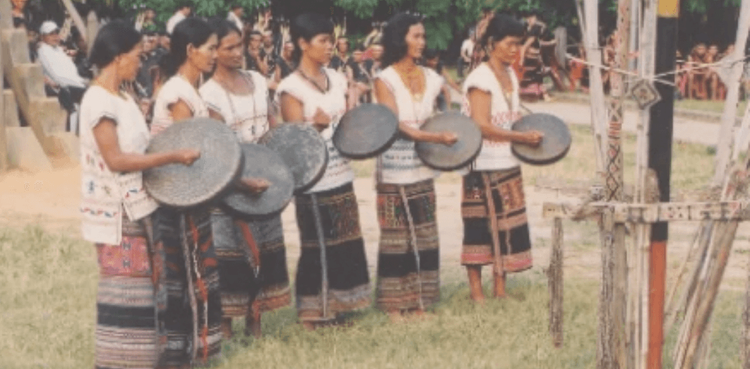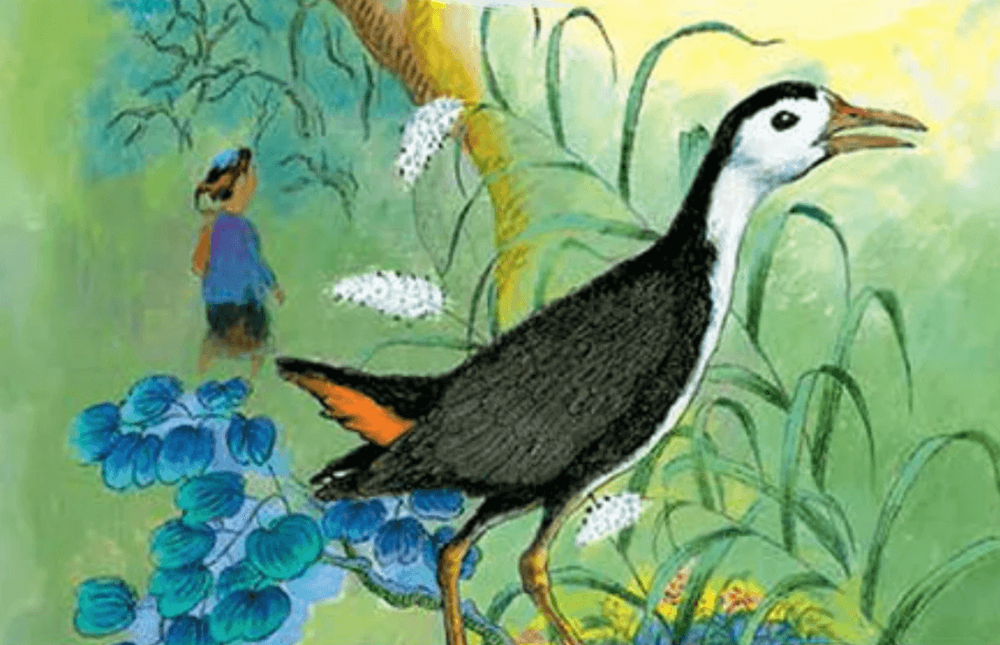
"Treasury of Vietnamese Folktales" by Nguyễn Đổng Chi, published by the Education Publishing House in Hanoi in 2000 as its eighth edition, is a major work of collection and scholarship on Vietnamese folktales. The work is divided into three parts. The first examines the nature, origins, and historical development of Vietnamese folktales; the second presents 201 folktales, accompanied by variants and related materials; and the third offers broader observations on the characteristics, origins, and cross-cultural exchanges of the Vietnamese folktale tradition. The volume concludes with a bibliography for further research.
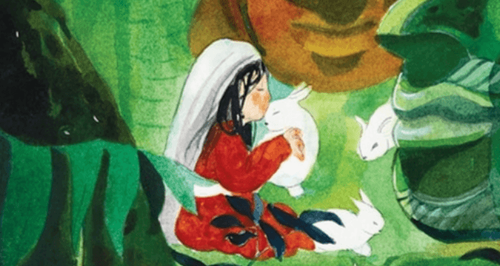
This collection brings together 58 stories from the rich oral and literary traditions of the Cham people. 32 tales were selected from materials held by the Centre and shared by individuals and families in Cham villages in Ninh Thuận and Bình Thuận. 26 tales were collected by Tuấn Dũng from books and magazines. Stories about Po Nai and Po Ri Yak sit alongside tales rooted in Cham customs and spiritual life. Together, they offer insights into how Cham communities have told stories about love, work, justice, and courage.

Through the collection of Kơ Ho folktales, we can gain insight into the richness and diversity of successive cultural layers that have interacted, blended, and enriched one another throughout the long history of ethnic communities in Lâm Đồng and the Central Highlands. These cultural layers range from the swidden agriculture traditions of the highland regions to the wet rice cultivation culture and the coastal cultural influences. In addition to the indigenous cultural foundations created by the ancestors of these ethnic minority peoples, history has also witnessed the exchange and integration of new cultural elements introduced by the Chăm and Vietnamese people. The treasury of Kơ Ho folktales and their cultural heritage as a whole serve as a testament to this dynamic cultural evolution.
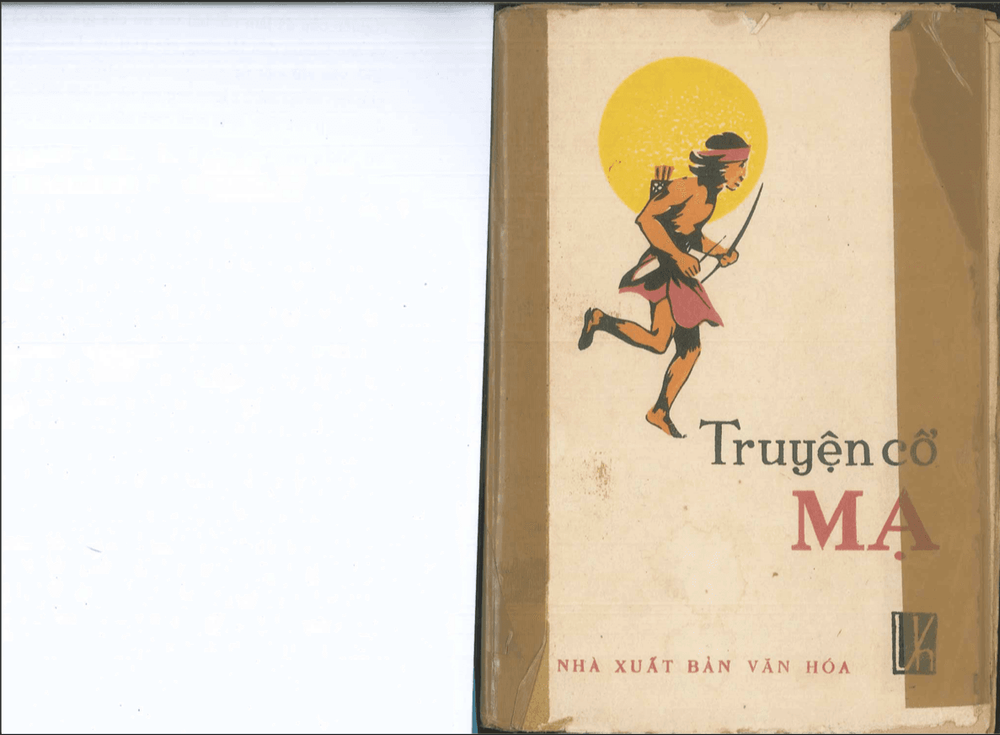
The Mạ people are a member of the great national family of Vietnam and have long inhabited the majestic Central Highlands. They possess a rich folk literature and arts heritage, distinctly reflecting their unique cultural identity. The collection and publication of Mạ folktales play a crucial role in allowing the Mạ people to express their voice while also helping other ethnic nationalities understand their character and spirit. This book by author Tạ Văn Thông is therefore of great significance in preserving the folk cultural traditions of the Mạ people in particular and Vietnam’s ethnic minorities in general.
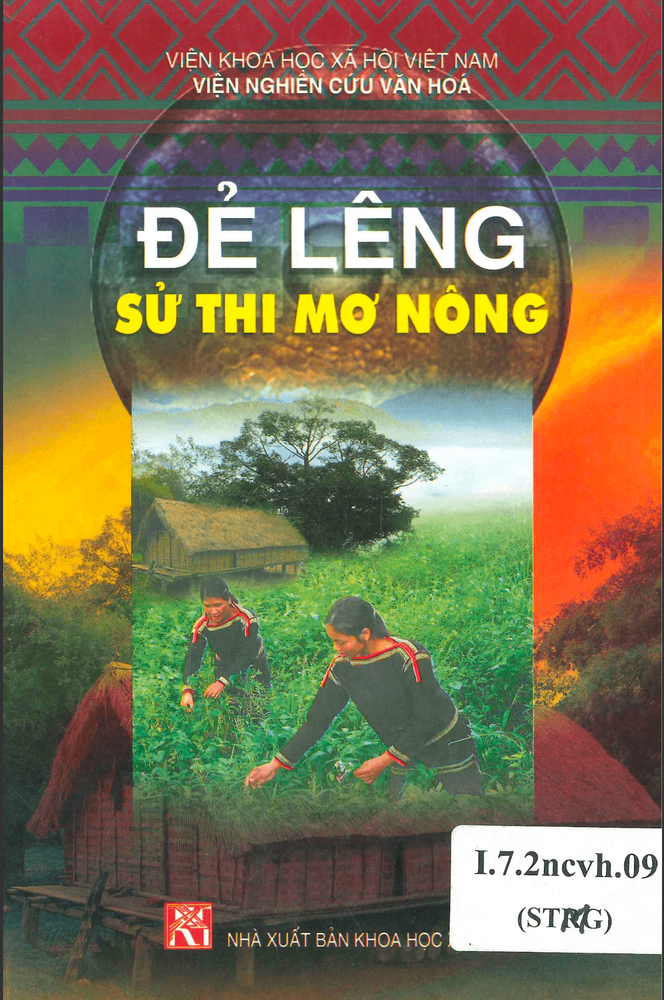
Đẻ Lêng is a traditional epic of the Mơ Nông people of Vietnam's Central Highlands, recounting the extraordinary life and adventures of Lêng, a hero endowed with supernatural powers. Born under unusual circumstances, separated from his birth mother, and raised in a world where humans and divine beings interact, Lêng undergoes numerous trials, fierce battles, and a journey to discover his origins. The narrative weaves together themes of maternal love, reunion, romance, courage, and conflicts between communities. Through fantastic imagery, mythic battles, and rhythmic storytelling, the epic offers insights into Mơ Nông cosmology, spiritual beliefs, and social life. Originally performed by the storyteller Điểu Mpioih, the epic was collected by Đỗ Hồng Kỳ and Lê Ngọc Phúc, and transcribed and translated into Vietnamese by Điểu Kâu. The complete version was published in 2006, followed by an abridged edition in 2009, contributing to the preservation and wider appreciation of Mơ Nông oral epic heritage.
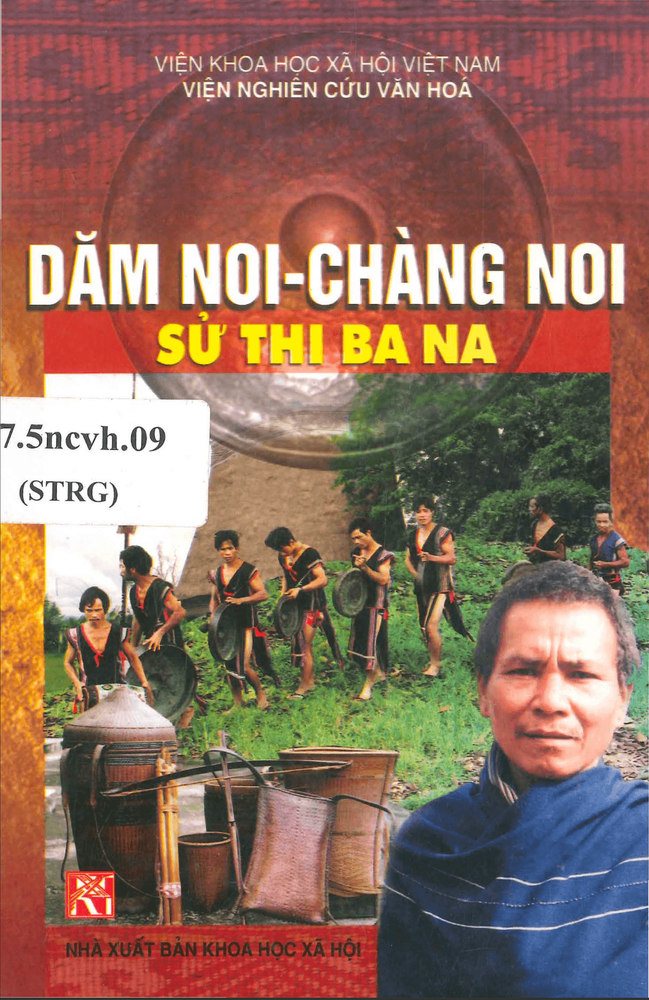
Dăm Noi – Chàng Noi (The Epic of Noi) is a traditional epic of the Ba Na people of Vietnam's Central Highlands, recounting the heroic deeds and extraordinary adventures of Noi and his four brothers, Yung, Yol, Dơhrít, and Hmeng. The sons of Dăm Set and Rak, the five brothers possess supernatural strength and embark on a quest to avenge their ancestors and villagers, who had been killed by the cruel Pơdrang Hơ – Pơdrang Hơm. Along their journey, they confront supernatural forces, overcome formidable challenges, acquire magical treasures, and achieve remarkable victories. Beyond its heroic battles, the epic vividly portrays Ba Na village life, rituals honoring spiritual beings, communal celebrations, marriage customs, and family relationships. The narrative was originally performed by the storyteller Bok Angep, collected by Nguyễn Quang Tuệ, and transcribed and translated into Vietnamese by Siu Pết. The complete text was published in 2006, followed by an abridged edition in 2009 to make this oral epic heritage more accessible to local communities and new generations of readers.
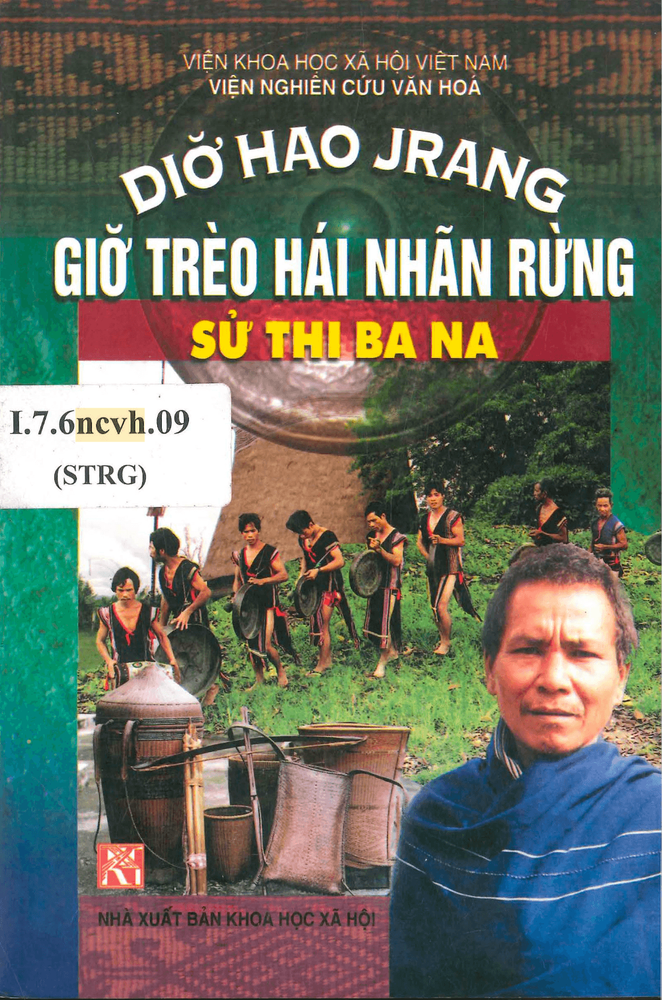
Diơ hao jrang – Giơ trèo hái nhãn rừng (Giơ Climbs to Gather Wild Longans) is a traditional epic of the Ba Na people of Vietnam's Central Highlands. The narrative centers on a journey into the forest to gather wild longans, which develops into a series of confrontations between heroic figures and powerful adversaries. What begins as a seemingly simple effort to collect forest fruit for villagers unfolds into an expansive world of adventures, supernatural battles, and trials of courage, ingenuity, and solidarity. Central to the story are the heroes Giơ Tu Krong, Giơ Hreng, and Pham, who confront Bok Kiek La Dia Kla Kong in a dispute involving a wild longan tree. Beyond celebrating heroic strength and character, the epic reflects Ba Na understandings of nature, access to forest resources, and communal life. Originally performed by the storyteller Bok Ponh, the epic was collected by Nguyễn Quang Tuệ, and transcribed and translated into Vietnamese by Siu Pết. The complete version was published in 2006, followed by an abridged edition in 2009. Both publications serve as valuable resources for preserving, studying, and transmitting the Ba Na epic tradition.
A Treasury of Vietnamese Proverbs (Nguyễn Xuân Kính, ed., Culture-Information Publishing House) offers a collection and systematization of 16,098 proverbs of the Viet people. The proverbs are drawn from many sources, including published collections, fieldwork materials, and older texts. This first part begins with a list of abbreviations and symbols. It explains how sources, variants, and presentation conventions are marked, so readers can look up and cross-check entries accurately. The main body arranges the proverbs in Vietnamese alphabetical order, and this part covers entries from A to C.
A Treasury of Vietnamese Proverbs (Nguyễn Xuân Kính, ed., Culture and Information Publishing House) is a large-scale work that collects and systematizes the proverbs of the Viet people. The proverbs are drawn from many sources: published collections, fieldwork materials, and older texts. Volume 1, Part 2 arranges the proverbs in Vietnamese alphabetical order, from D to L.
A Treasury of Vietnamese Proverbs (Nguyễn Xuân Kính, ed., Culture and Information Publishing House) is a large-scale work that collects and systematizes the proverbs of the Viet people. The proverbs are drawn from many sources: published collections, fieldwork materials, and older texts. Volume 2, Part 1 arranges the proverbs in Vietnamese alphabetical order, from M to S.
A Treasury of Vietnamese Proverbs (Nguyễn Xuân Kính, ed., Culture and Information Publishing House) is a large-scale work that collects and systematizes the proverbs of the Viet people. The proverbs are drawn from many sources: published collections, fieldwork materials, and older texts. Volume 2, Part 2 is the closing part of the set. It continues the alphabetical arrangement of proverbs from T to Y. This is followed by a thematic index, which lets readers find proverbs by subject, and an index of the place names and personal names that appear in the proverbs. The part also includes a bibliography of works on proverbs and a list of other references, which together support further research. The book ends with brief profiles of the compilers who worked on the project.
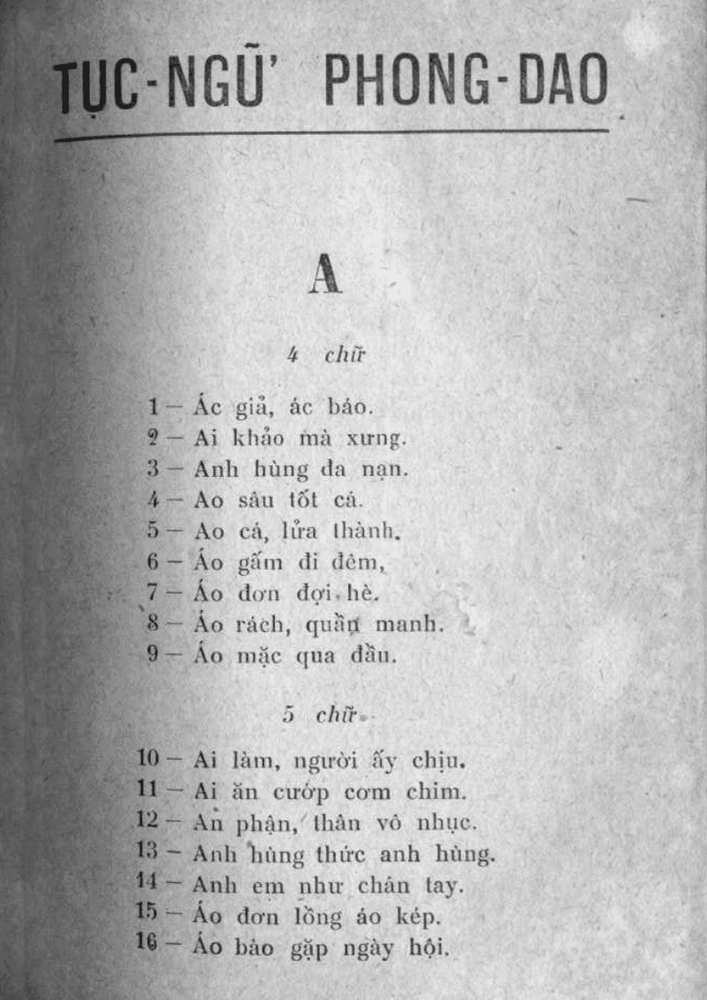
Proverbs and Folk Poetry (Tục-ngữ Phong-dao) by Nguyễn Văn Ngọc (pen name Ôn Như) is a large-scale collection and preservation project of Vietnamese folk literature, published in 1928. It compiles approximately 6,500 proverbs and over 850 folk poems recorded from oral traditions as well as from ancient books, accompanied by systematic classification and arrangement. The work is divided into two volumes: the Upper Volume contains sayings ranging from three to twenty-three words in the forms of regional expressions (phương ngôn) and proverbs (tục ngữ); the Lower Volume – Part 1 contains stanzas of four lines or more in the form of folk songs (phong dao or ca dao); and the Lower Volume – Part 2 is an appendix of riddles (câu đố). In the introduction, the author states his principle of prioritizing the collection of as many entries as possible over refined selection from the outset, without drawing overly strict distinctions between idioms, proverbs, aphorisms, prophecies, riddles, regional expressions, children’s rhymes or folk songs.
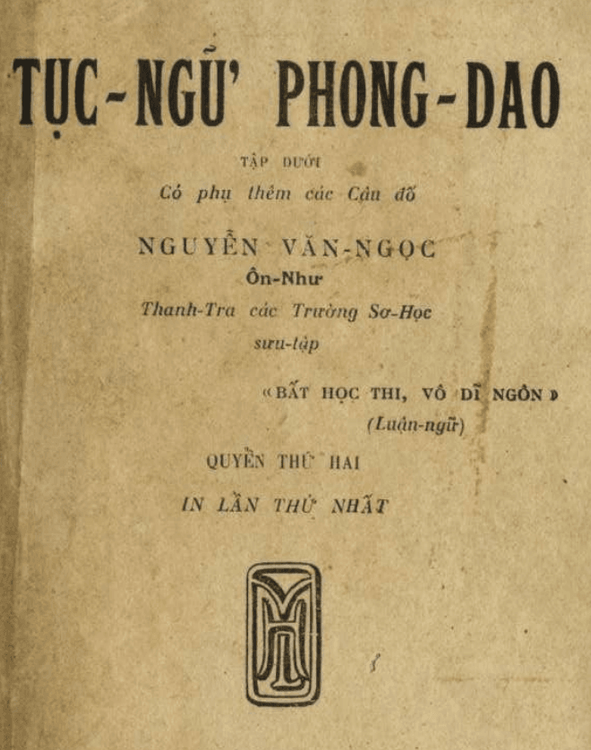
Proverbs and Folk Poetry (Tục-ngữ Phong-dao) by Nguyễn Văn Ngọc (pen name Ôn Như) is a large-scale collection and preservation project of Vietnamese folk literature, published in 1928. It compiles approximately 6,500 proverbs and over 850 folk poems recorded from oral traditions as well as from ancient books, accompanied by systematic classification and arrangement. The work is divided into two volumes: the Upper Volume contains sayings ranging from three to twenty-three words in the forms of regional expressions (phương ngôn) and proverbs (tục ngữ); the Lower Volume – Part 1 contains stanzas of four lines or more in the form of folk songs (phong dao or ca dao); and the Lower Volume – Part 2 is an appendix of riddles (câu đố). In the introduction, the author states his principle of prioritizing the collection of as many entries as possible over refined selection from the outset, without drawing overly strict distinctions between idioms, proverbs, aphorisms, prophecies, riddles, regional expressions, children’s rhymes or folk songs.
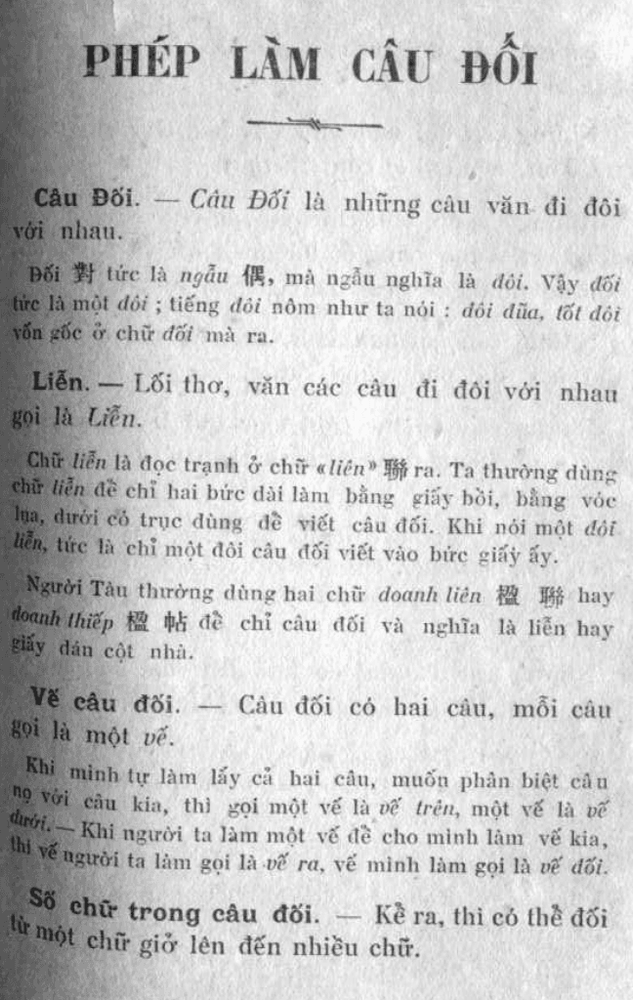
Poetic couplets (Câu đối) by Nguyễn Văn Ngọc (pen name Ôn Như) is a collection and study of one of Vietnam’s distinctive forms of folk literature — the câu đối (parallel couplet). In the preface, the author affirms that câu đối is not only a concise, rhymed form for honing intellect and language skills, but is also deeply embedded in cultural life, from the royal court to rural villages, appearing on occasions such as festivals, Lunar New Year, birthday celebrations, funerals, and home decorations.
Vietnamese Proverbs, Folk Verses and Folk Songs (compiled by Vũ Ngọc Phan, 10th edition, 1997) combines scholarly study with an anthology of three genres of Vietnamese oral verse: proverbs (tục ngữ), folk verses (ca dao) and folk songs (dân ca). The author began gathering material in 1953, through his own collecting in different localities, recitations by fellow writers and artists, and selections from books and newspapers. First published in 1956, the book was revised and expanded in each later edition. Writing as a literary scholar, the author leaves aside melody and musical form and arranges the material by content for ease of reference. The book has six parts: the content and artistic form of proverbs, folk verses and folk songs; humans and nature; social relations, including verses from the resistance wars against the French and the Americans; folk songs; a selection of proverbs and folk verses of the upland ethnic peoples; and a conclusion. It remains a classic reference for the study of Vietnamese folk literature.
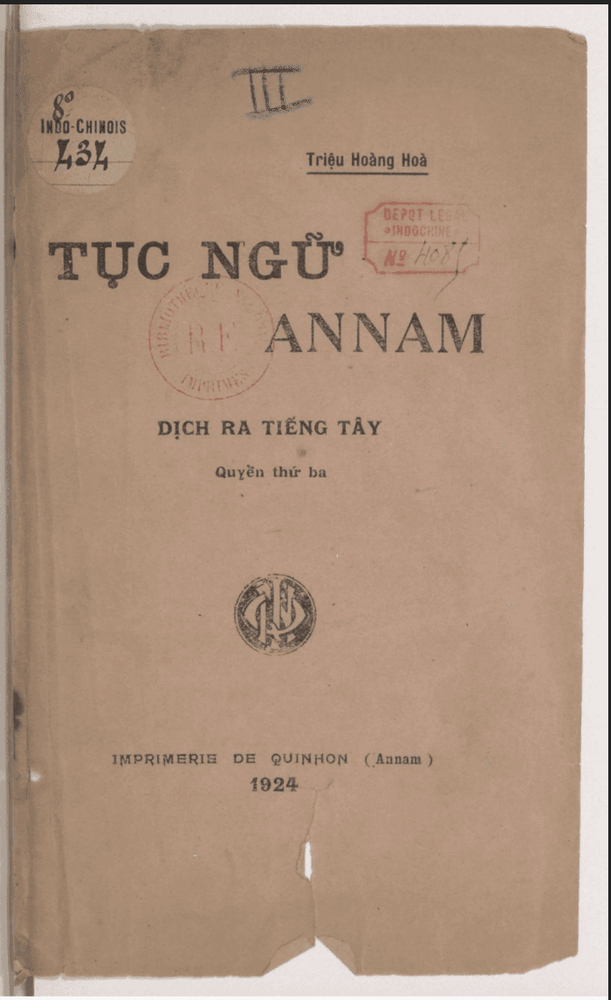
Annamese Proverbs Translated into French (Tục ngữ An Nam dịch ra tiếng Tây) was compiled by Triệu Hoàng Hòa in the context of Vietnamese–French cultural exchange during the colonial period. The work selects many distinctive proverbs rich in imagery and implication, reflecting the lived experience, folk wisdom, and moral values of the Vietnamese people. Translating them into French not only enabled French-speaking readers to access the wealth of Vietnamese folk wisdom, but also contributed to the introduction, preservation, and study of Vietnam’s intangible cultural heritage in the early 20th century. The book has been digitized by the Bibliothèque nationale de France (BnF).
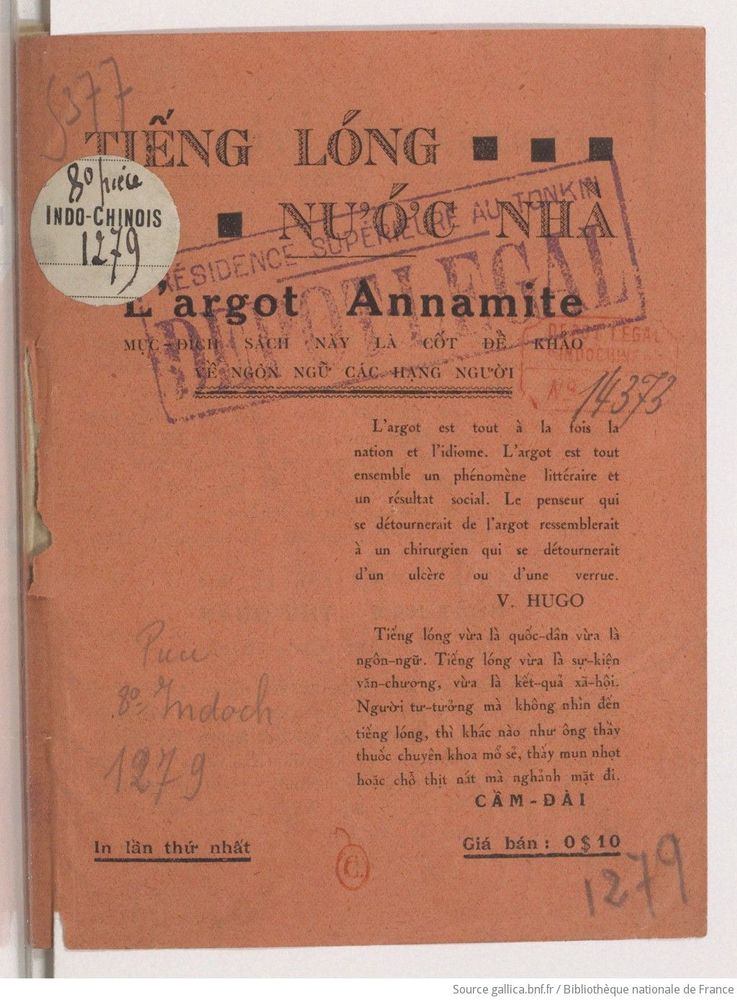
Trần Trung Viên’s Vietnamese Slangs (Tiếng lóng nước nhà) records and systematizes multiple layers of slang in everyday life, from common folk to so-called “marginal groups”. Trần Trung Viên warns readers about the presence of vulgar expressions, considering them an inevitable part of “surveying the full range of speech across classes.” This work has been digitized by BnF.
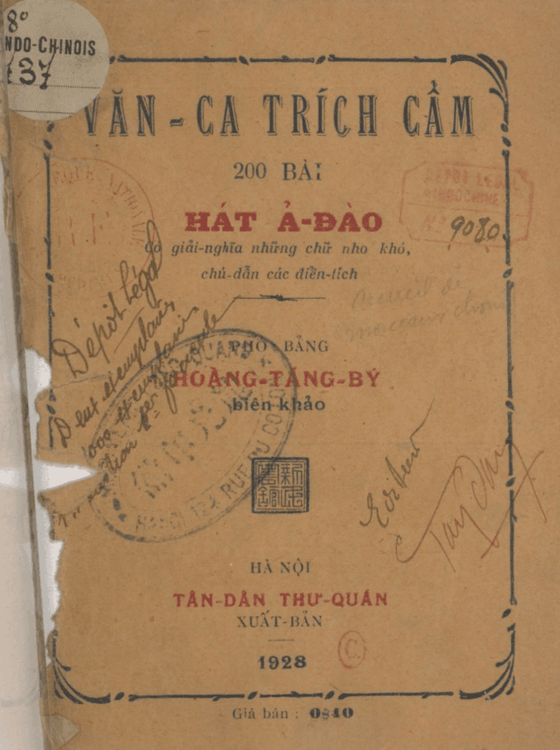
A Literary Anthology of 200 Songs of Ả đào (Văn-ca Trích cẩm: 200 Bài Hát Ả Đào) was compiled by Phó bảng Hoàng Tăng Bí. The volume preserves lyrics rich in satire, love, and philosophical reflection, while also providing explanations of Sino-Vietnamese terms and classical allusions. The book has been digitized by the Bibliothèque nationale de France (BnF).
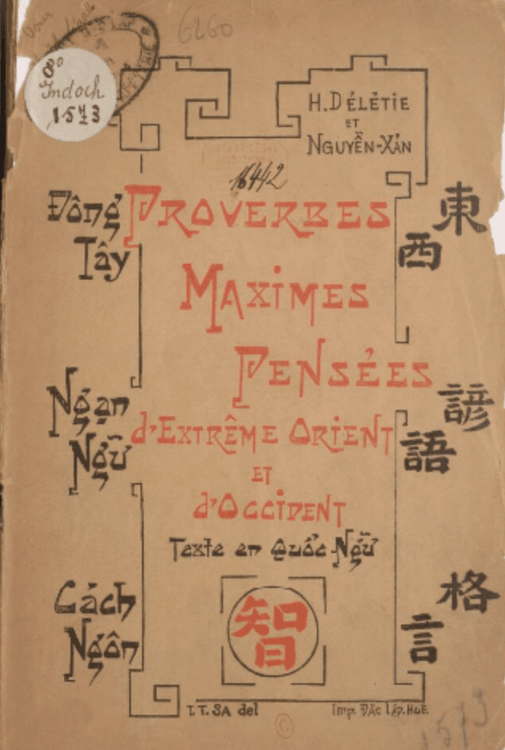
Proverbes, Maximes, Pensées d’Extrême Orient et d’Occident (Đông Tây Ngạn ngữ Cách ngôn) is a bilingual collection, presenting proverbs and maxims from both Eastern and Western traditions in quốc ngữ, with classical Sino-Vietnamese characters and French sources provided in notes. This volume aims to be both a practical moral guide for youth and families in colonial Indochina and a pedagogical resource aligned with official school curricula.
Dictionary of Vietnamese Idioms, Proverbs and Folk Verses, Volume 1 (compiled by Việt Chương, Đồng Nai Publishing House, 3rd reprint edition) is the first volume of a large dictionary of Vietnamese folk sayings. The full set runs to nearly 2,000 pages and brings together more than 15,000 idioms (thành ngữ), proverbs (tục ngữ) and folk verses (ca dao), with some Sino-Vietnamese idioms included for reference. Each entry comes with a thorough, accessible explanation, so the work serves both general readers and researchers. The compiler spent more than ten years on the project, hoping to help introduce the riches of Vietnamese folk knowledge and culture to a wider audience. Volume 1 contains proverbs starting with A and ending with proverbs starting with L.
Dictionary of Vietnamese Idioms, Proverbs and Folk Verses, Volume 2 (compiled by Việt Chương, Đồng Nai Publishing House, 3rd reprint edition) is the second volume of a large dictionary of Vietnamese folk sayings. It continues from Volume 1 and covers entries from M to Y. The full set runs to nearly 2,000 pages and brings together more than 15,000 idioms (thành ngữ), proverbs (tục ngữ) and folk verses (ca dao), with some Sino-Vietnamese idioms included for reference. Each entry comes with a thorough, accessible explanation, so the work serves both general readers and researchers. The compiler spent more than ten years on the project, hoping to help introduce the riches of Vietnamese folk knowledge and culture to a wider audience. It was revised and expanded across its reprints. It is one of the most extensive works of its kind and a useful reference for the study of Vietnamese language, literature and folk culture.